Since our discussion yesterday, I’ve been thinking about
smells. Partially because Elizabeth brought up that Twenty One Pilots song with
the lines: “Sometimes a certain smell will take me back to when I was young /
Howcome I’m never able to identify where it’s coming from?” and that song is a tune, but partially because it’s strange
to me how dull our capacity for olfactory sensory experience—as humans, at
least—is from other animals.
It’s funny that we have such weak noses, and yet we spend
tons of money on smelling good. Johnston points out the irony on page 7, when
he says that we can walk into any steak house and “detect the steroidal odors
of exotic creatures on both men and women” and none of the actual odors of
human beings. Through the holidays, I worked in retail cosmetics and sold a ton of perfumes. The scent industry (perfumes and colognes but also shampoos, body-washes, etc) is massive and often expensive, and yet despite
the huge variety of scents out there, I listened to every customer describe often completely different scents with the same five words—musky, spicy, floral, sweet, clean, (bad). Of
those five words, spicy, sweet, and clean are adjectives for other senses that
we’ve just learned to attribute to scents. Our scent-based lexicon is insanely small.
 |
| Truly the most important scent. |
Later on the same page, Johnston argues that we have “little
language proper to smell,” meaning we have little ability to convey distinct
scents without using metaphors from other senses, or just the name of the thing
we’re smelling (popcorn smells like popcorn tastes, so we say things with
similar smells smell like popcorn, etc). And, if the theory that humans need
words for concepts in order to understand them, this would explain a big reason
we tend to have such a dull sense of smell. Obviously, this is mostly
biological capability, but it could potentially be linguistic too.
So this got me thinking about whether this is a specifically
English language (or even specifically Indo-European) phenomemon, that we
potentially have fewer words for scents than other languages. So I did as one
does and I took to Google for an answer.
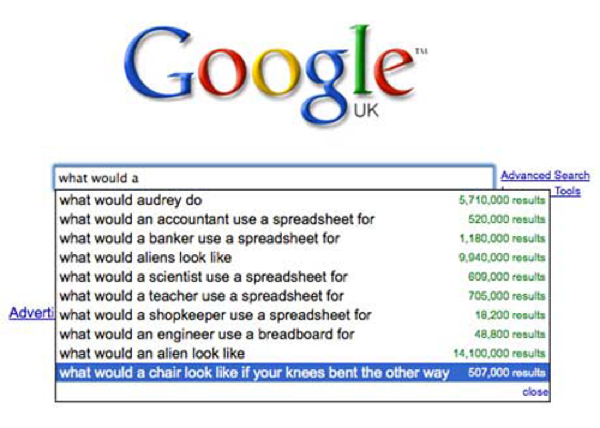 |
| England really doesn't understand Microsoft Excel. |
As it turns out, I found these two articles discussing a
2014 study (which may have continued into 2015, the dates are unclear) in which
researchers found two small Southeast Asian groups whose native languages have
specific dedicated smell words. One was the Jahai people of Malaysia and the
other the Maniq of Thailand. And researchers compared their ability to
distinguish smells and to distinguish colors and compared it with a small group
of native English-speakers. This is what they found:
Although the volunteers tended to describe each smell and color in their own words, it quickly became clear that Jahai speakers could describe colors and odors with equal precision, while English speakers showed less aptitude for smells than for colors. While Jahai speakers' ability to distinguish smells averaged out just a few percentage points below their ability to distinguish colors, English speakers' odor-naming precision averaged out to less than one tenth of their color distinction specificity.
So, while their language obviously doesn’t increase their
biological sense of smell, it increases their ability to distinguish smells. So,
even if we don’t have to have specific words for a concept to understand it, it
seems clear that language heavily influences our sensory experience, whether it’s
our ability to name scents like the Jahai's cŋεs—the smell of gas, smoke, and
bat droppings—or how many colors we can distinguish in English-speaking
societies as opposed to the African Himba society.
So I ask this: Can
we not understand Derrida’s cat or the bears Treadwell filmed because of the limits placed on us by our language? Could the Jahai better understand Johnston's dog that us, native English speakers could? Or is this a problem with not just our own language, but
language as a concept—does it limit our ability to encounter? Or is language what allows us to get closer to the
sensory experience of those ways of being?

Very, very interesting post Emily! I have to say that last class's discussion had me thinking a lot about the concepts that you're exploring in your post. Personally, I don't think that our lack of understanding for Derrida's cat, Treadwell's bears, or Johnston's dog stems from the limits placed on us by language. I think our lack of understanding mainly comes from our inability to fully comprehend the way in which animals exist. We can try hard to empathize with animals, but we will always fall short of fully immersing ourselves in their beings, because we are humans.
ReplyDeleteThis comment has been removed by the author.
ReplyDeleteI agree with both Emily and Nicole on this one. While I do believe the Jahai could have a better understanding of say a dog it is as Nicole says a limit of language. We humans simply don't communicate the same way a dog or cats does the same way a mouse probably couldn't talk to a crow. It would be reasonable to assume that most species have differing ways of communication that best benefit them between their own species. Thus even though there may be a language out there that could connect better with say a dogs understanding of the world, as Nicole said, we fall short of truly immersing in and understanding them.
ReplyDelete